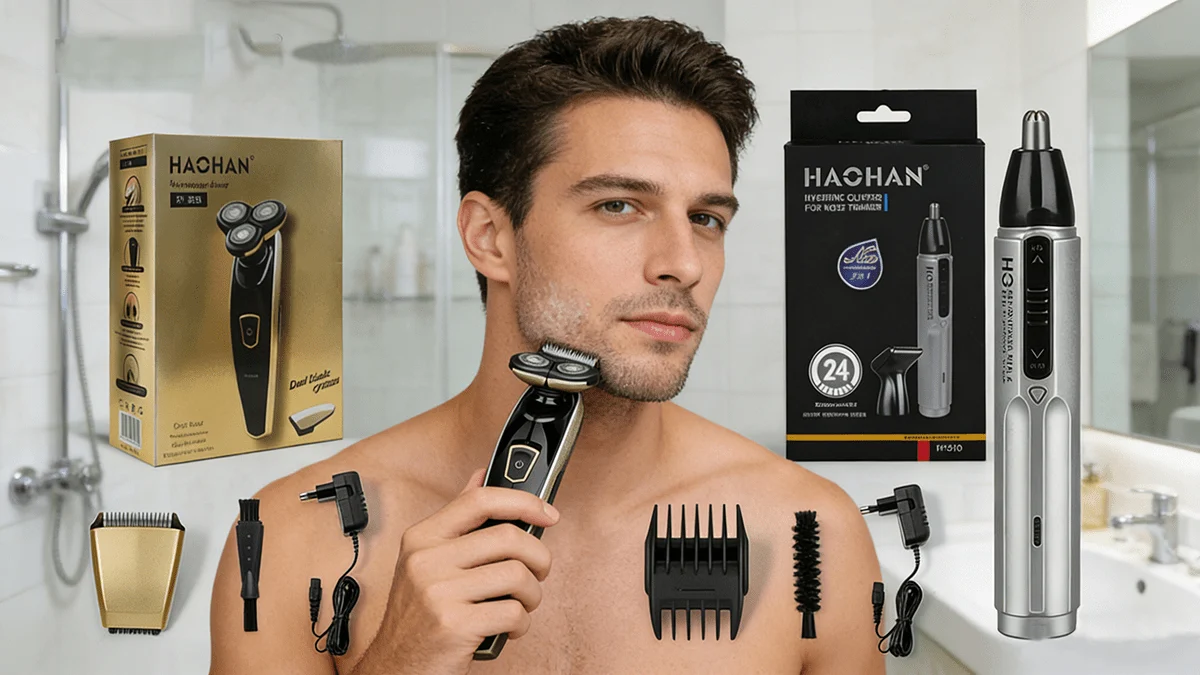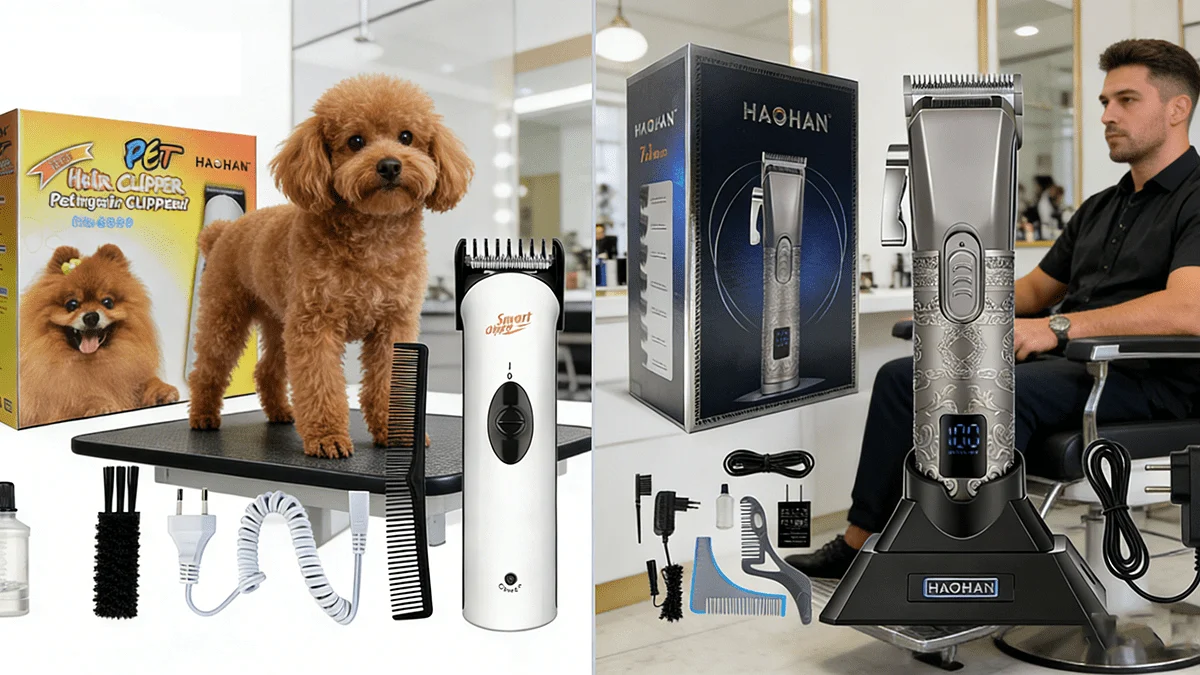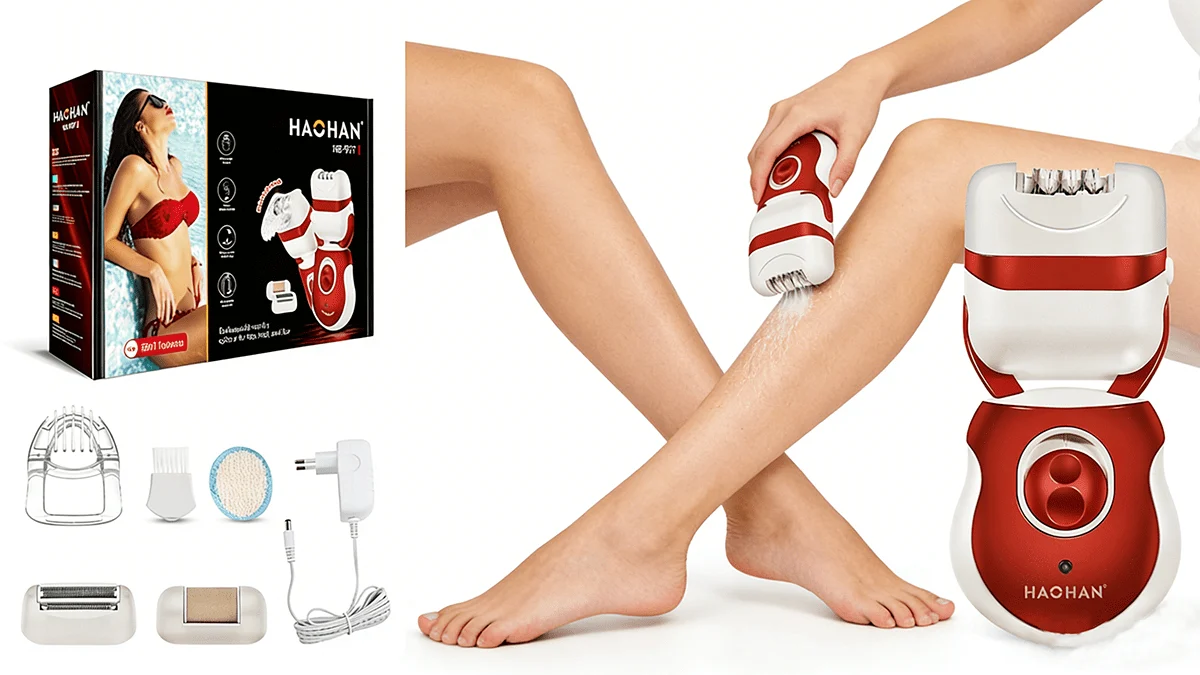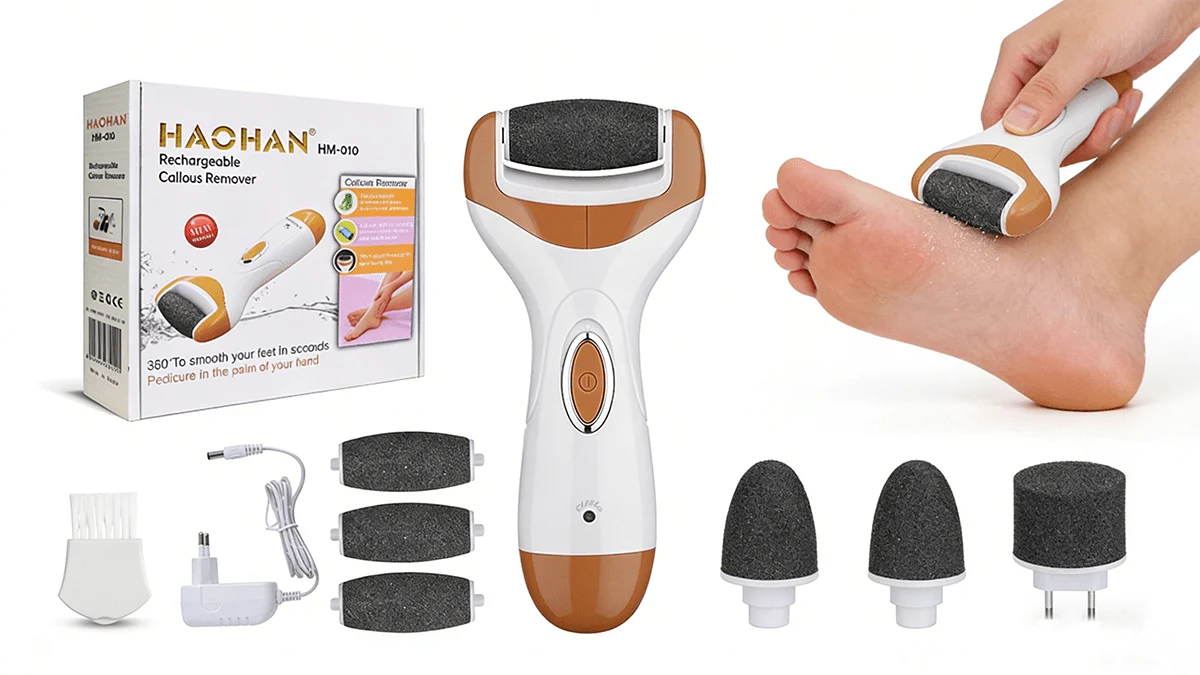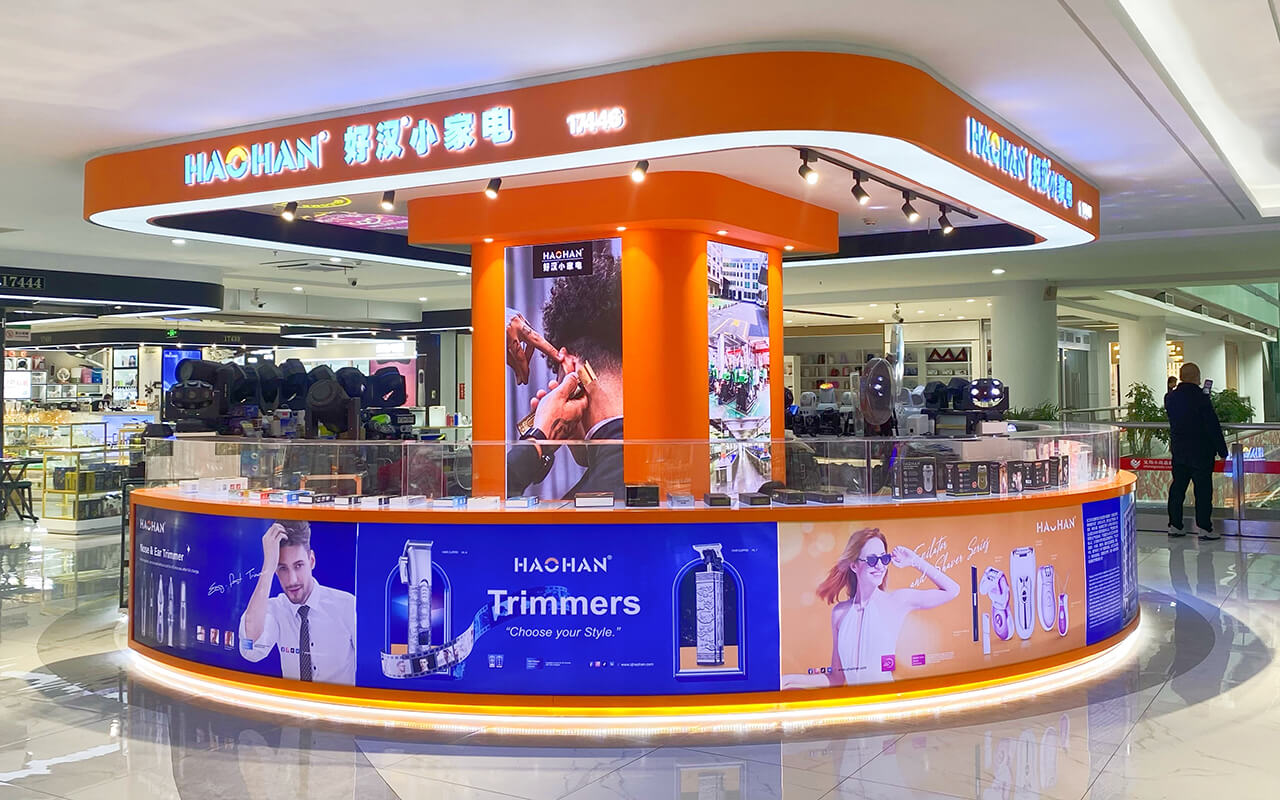
Need a dual-speed professional hair trimmer that meets U.S. market compliance—without engineering expertise on your team? Zhejiang Haohan Electric Appliance Co., Ltd. delivered a fully customized, UL- and FCC-certified custom-branded grooming device for a U.S.-based brand in just 12 weeks—from concept to production-ready units.
Client Background
- Location: United States
- Type: Early-stage personal care brand with direct-to-consumer (DTC) e-commerce operations
- Pain points:
- No in-house engineering or regulatory staff; unable to specify motor control architecture or compliance pathways
- Rejected two prior supplier proposals due to lack of U.S.-targeted certification planning (UL/FCC/CA Prop 65)
- Required physical branding integration (logo placement, color-matched housing, retail-ready packaging) but lacked injection molding or packaging design capacity
- Needed dual-speed functionality with tactile, fail-safe switching—no software dependencies or app reliance
Stated Requirements
- A professional-grade trimmer, fully customized: housing geometry, brand color scheme (Pantone 294C + matte black), logo embossing, and retail-ready blister + carton packaging
- Two user-selectable operating speeds (6,500 RPM / 8,200 RPM), controlled via mechanical slide switch (no firmware, no battery drain from logic circuits)
- U.S. market compliance: UL 60335-2-100 (household appliance safety), FCC Part 15B (EMI), ANSI Z535-compliant labeling, California Proposition 65 warnings, and “Made in China” origin marking per 19 CFR §134
Solution Delivered
Haohan executed end-to-end OEM development—including industrial design, motor & PCB architecture selection, compliance testing coordination, and full-line production—with zero handoffs to third-party labs or design houses.
- In-stock wholesale availability: 100% configurable base model (min. order: 1 full carton = 48 pcs)
- Full customization path: Achieved at 3,000 pcs MOQ—covering housing color, logo embossing depth (0.3 mm ±0.05 mm), battery capacity (1,800 mAh Li-ion), USB-C charging, and dual-voltage input (100–240 V AC adapter)
- Regulatory ownership: Haohan managed all UL listing (E517539), FCC ID (2AGXH-HT200), and Prop 65 documentation; provided final label artwork compliant with CPSC 16 CFR Part 1500
Technical Specifications
| Parameter | Specification |
| Motor Type | High-torque rotary motor with dual-winding configuration |
| Speed Control | Mechanical slide switch (IP54 sealed); no microcontroller or firmware |
| Battery | 1,800 mAh Li-ion, 90-min runtime at low speed, 65-min at high speed |
| Charging | USB-C input (5 V / 2 A); full charge in 90 minutes |
| Certifications | UL 60335-2-100, FCC Part 15B, RoHS, REACH, CA Prop 65 |
| Packaging | Blister + 4-color CMYK carton (FSC-certified board); includes multilingual safety leaflet (EN/ES) |
Project Outcome
- Time-to-market reduced by 37%: First production batch shipped 84 days after contract signing—vs. industry average of 132 days for first-time U.S.-compliant OEM trimmers
- Zero compliance rework: All 3,000 units passed UL factory inspection on first audit; no labeling or EMI failures
- Brand execution fidelity: Logo embossing tolerance held to ±0.03 mm across all units; Pantone-matched housing color deviation ΔE ≤ 0.8 (measured via spectrophotometer)
- Commercial impact: Client launched on Amazon US with Prime eligibility; achieved $247,000 in Q1 revenue (1,850 units sold)
Why This U.S. Brand Chose Haohan
- End-to-end technical ownership: In-house R&D team (42 engineers) designed the dual-winding motor architecture and validated switching reliability over 10,000 cycles
- U.S.-focused compliance infrastructure: Dedicated regulatory coordinator with 12+ years handling UL/FCC submissions for personal care devices—no subcontracted labs
- Tooling flexibility: Modified existing mold base (HT-200 platform) to accommodate new housing geometry—cut tooling cost by 63% vs. full-new mold
- Production scalability: 10 million-unit annual capacity enabled guaranteed delivery of 3,000 pcs in 4 weeks post-approval
- Documentation transparency: Provided complete Bill of Materials (BOM), UL file number, FCC test reports, and packaging artwork source files
- After-sales traceability: Each unit serialized with QR code linking to manufacturing date, QC batch, and component lot numbers
Customization Options Available for Your OEM dual-mode trimming tool
| Customization Area | Minimum Order Quantity (MOQ) |
| Logo Application (embossing, laser etch, pad print) | 3,000 pcs |
| Housing Color & Texture (RAL/Pantone matched) | 3,000 pcs |
| Packaging Design (blister, box, inserts) | 3,000 pcs |
| Electrical Adaptation (voltage, plug type, USB-C/DC input) | 3,000 pcs |
| Battery Capacity & Chemistry (Li-ion/Li-Poly) | 3,000 pcs |
| Speed Modes & Interface (mechanical switch, button, dial) | 3,000 pcs |
Ready to Launch Your branded two-speed precision trimmer?
Share your functional intent, target market, and brand guidelines. We’ll deliver a technical solution proposal—including architecture recommendations, compliance roadmap, timeline, and MOQ-aligned costing—within 5 business days.
Frequently Asked Questions
Can you supply dual-speed professional hair trimmer units without branding for immediate resale?
Yes. We maintain a certified in-stock wholesale program: 100% configurable base models ship within 48 hours of order confirmation. Minimum order is one full carton (48 pcs). All units include UL/FCC-compliant electronics, dual-winding motor, and USB-C charging—ready for private-label or white-label integration.
What lead time applies to a fully customized custom-branded grooming device at 3,000 pcs MOQ?
From signed contract to FOB shipment: 8–10 weeks. This includes industrial design finalization, mold modification (if required), compliance testing, and production. Sample delivery occurs within 7 business days of design approval—no tooling deposit required for existing platform adaptations.
Do you support regional electrical standards for an adjustable-speed barber trimmer sold across multiple markets?
Yes. We configure voltage input (100–240 V AC), plug types (EU, UK, US, AU), and battery output specifications per target market. All configurations undergo region-specific certification: UL/ETL for North America; CE + UKCA + RoHS for EEA/UK; SIRIM for Malaysia; ANATEL for Brazil.
How do you ensure consistent color and logo accuracy on a OEM dual-mode trimming tool?
We enforce strict tolerances: Pantone-matched housing color deviation ≤ ΔE 0.8 (measured pre-shipment); logo embossing depth held to 0.3 mm ±0.03 mm across all 3,000 units. Spectrophotometer reports and embossing gauge logs are provided with every batch.
Can you produce a branded two-speed precision trimmer with mechanical speed switching—and no firmware dependencies?
Yes. All dual-speed variants use a sealed IP54 mechanical slide switch—zero microcontrollers, zero firmware updates, zero battery drain from logic circuits. Switch durability is validated to 10,000+ cycles. Electrical architecture documentation, including schematic and BOM, is delivered with final samples.